
When parents think of Autism Spectrum Disorder (ASD), social communication and behavioral cues are usually the first things that come to mind. However, physical development and gross motor milestones play an equally vital role in your child’s daily exploration and independence.
Many children on the autism spectrum experience subtle to moderate gross motor delays, postural imbalances, or atypical movement patterns. Recognizing these early physical signs enables parents to take proactive steps through targeted therapy, ensuring children build the strength, balance, and confidence they need to thrive
Common Physical Milestone Delays in Autism
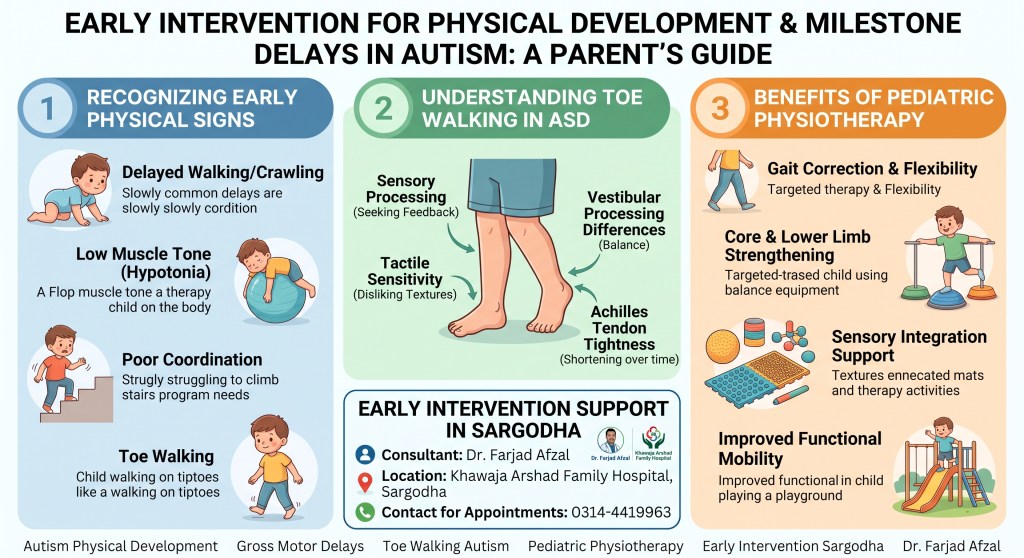
Gross motor milestones involve the large muscle groups used for sitting, crawling, walking, running, and jumping. In children diagnosed with ASD or related neurodevelopmental conditions, physical delays can present in several ways:
- Delayed Walking or Crawling: Late achievement of independent standing or walking beyond typical developmental windows.
- Low Muscle Tone (Hypotonia): The child appears “floppy,” tires quickly, or struggles with core stability while sitting upright.
- Poor Coordination and Dyspraxia: Difficulty coordinating both sides of the body for activities like climbing stairs, catching a ball, or pedaling a tricycle.
- Frequent Tripping or Clumsiness: Trouble maintaining balance due to reduced spatial and body awareness.
Why Toe Walking Occurs in Autism
Toe walking in autism is one of the most frequently observed gait patterns. While brief bouts of walking on tiptoes are common during toddlerhood, persistent toe walking after age two often points to underlying neuromuscular or sensory factors:
- Sensory Issues in Autism: Many children experience tactile hypersensitivity (disliking the texture or temperature of certain surfaces on their bare feet) or seek extra proprioceptive feedback through their calf muscles and ankle joints.
- Vestibular Processing Differences: An under- or over-responsive inner-ear balance system can lead a child to adjust their center of gravity by rising onto their toes.
- Achilles Tendon Tightness: Over time, consistent toe walking shortens the calf muscles and Achilles tendon, making it physically difficult or painful to achieve a flat-foot (heel-to-toe) gait without targeted stretching and therapy.
The Power of Physiotherapy for Autism
Engaging in targeted physiotherapy for autism bridges the gap between motor mechanics and sensory integration. Pediatric physical therapy focuses on child-centered, play-based interventions that address:
- Gait Correction & Flexibility: Gentle stretching protocols and manual techniques to lengthen tight heel cords and establish a natural heel-strike gait.
- Core & Lower Limb Strengthening: Dynamic exercises using therapy balls, balance beams, and obstacle courses to build stability and endurance.
- Sensory Integration Support: Activities that introduce varied tactile textures, deep pressure (proprioception), and controlled movement (vestibular input) to help regulate sensory responses.
- Functional Mobility: Helping children independently navigate stairs, run without falling, and participate comfortably in playground activities alongside their peers.
Early Intervention Support in Sargodha
Early identification of motor delays leads to significantly better long-term orthopedic, functional, and sensory outcomes. If you notice your child toe-walking, struggling with balance, or missing physical milestones, professional assessment provides the clear roadmap your child needs.
- Consultant: Dr. Farjad Afzal
- Location: Khawaja Arshad Family Hospital, Sargodha
- Contact for Appointments:
0314-4419963


Leave a Reply