

5 Best Sciatica Exercises for Pain Relief
Dealing with sciatica can be frustrating and painful, but the good news is that certain exercises can help you find relief.
Sciatica exercises are designed to ease the pain, strengthen your muscles, and improve flexibility.
In this article, we’ll explore the best exercises for sciatica pain, discuss whether you should exercise when in pain, identify exercises to avoid, and provide important safety tips.
Should You Do Exercises if You Have Sciatica Pain?
If you’re experiencing sciatica pain, you might wonder if exercising is a good idea.
The answer is yes, but with caution.
Exercise can help reduce sciatica pain by strengthening the muscles around your spine, improving flexibility, and increasing blood flow to the affected area.
However, it’s crucial to listen to your body.
If an exercise causes sharp or severe pain, it’s important to STOP immediately and try something else.
Gentle exercises and stretches are usually best, especially when you’re just starting out.
5 Best Sciatica Exercises
Here are 05 effective exercises that can help relieve sciatica pain.
Remember to perform these exercises slowly and gently, and stop if you feel any discomfort.
- Knee-to-Chest Stretch
- Lie on your back with your knees bent and feet flat on the floor.
- Bring one knee up to your chest, holding it with both hands.
- Hold for 20-30 seconds, then switch legs.
- This stretch helps relieve pressure on the sciatic nerve by stretching the lower back.
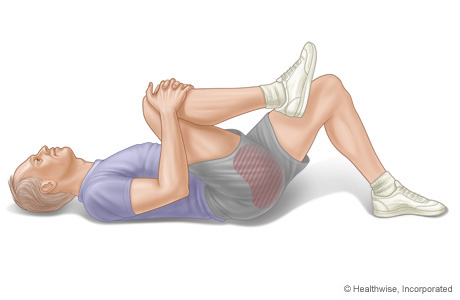
Image Source: my.health.alberta.ca
2. Piriformis Stretch
- Lie on your back with both knees bent.
- Cross one leg over the other so that your ankle rests on your opposite knee.
- Gently pull the bottom knee toward your chest until you feel a stretch in your buttock.
- Hold for 20-30 seconds, then switch legs.
- This stretch targets the piriformis muscle, which can irritate the sciatic nerve.
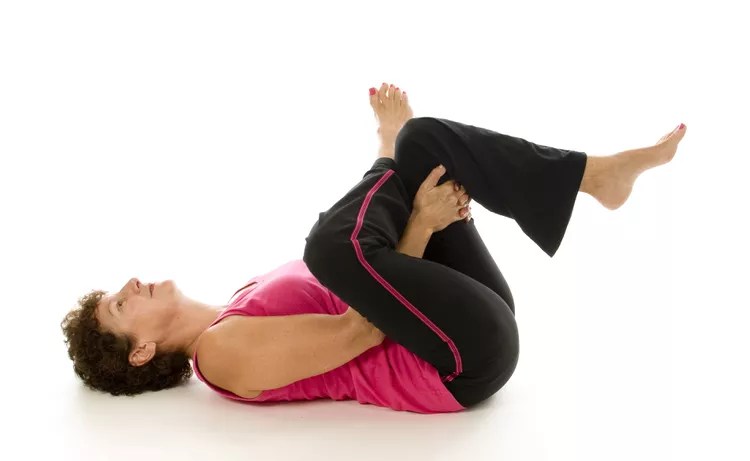
Image Source: verywellhealth.com
3. Seated Spinal Twist
- Sit on the floor with your legs extended.
- Bend one knee and place your foot on the outside of your opposite knee.
- Twist your torso toward your bent knee, placing your opposite elbow on the outside of the knee for support.
- Hold for 20-30 seconds, then switch sides.
- This twist helps to stretch the spine and relieve pressure on the sciatic nerve.

Image Source: petersenneuroscience.com
4. Pelvic Tilt
- Lie on your back with your knees bent and feet flat on the floor.
- Tighten your stomach muscles and press your lower back into the floor.
- Hold for 5-10 seconds, then release.
- Repeat 10-15 times.
- Pelvic tilts strengthen the lower abdominal muscles, which support the lower back.

Image Source: miamineurosciencecenter.com
5. Hamstring Stretch
- Stand at the bottom of a stair or a sturdy step.
- Place one foot on the stair, keeping your heel on the edge and your toes pointed upward.
- Gently lean forward from your hips, keeping your back straight, until you feel a stretch along the back of your raised leg.
- Hold the stretch for 20-30 seconds, then switch to the other leg.

Image Source: activesportschiro.com
Sciatica Exercises You Should Avoid
While exercising can be beneficial, certain movements can worsen sciatica pain.
It’s important to avoid exercises that involve putting too much pressure on the lower back.
- High-Impact Activities: Running, jumping, and heavy lifting can increase pressure on the sciatic nerve, making your pain worse.
- Toe Touches: Bending forward to touch your toes can put extra strain on your lower back and worsen sciatica symptoms.
- Leg Lifts: Lifting both legs while lying on your back can cause strain on the lower back and aggravate sciatica.
- Sit-Ups or Crunches: These exercises can increase pressure on the spine, which may worsen sciatic pain.
Before starting any new exercise routine, especially if you have sciatica, it’s important to keep a few safety tips in mind:
- Warm-Up First: Always warm up your muscles before exercising to prevent injury.
- Start Slow: Begin with gentle stretches and low-impact exercises, gradually increasing intensity as your body adapts.
- Listen to Your Body: If an exercise causes sharp pain, stop immediately. Pain is a signal that something isn’t right.
- Stay Consistent: Regular exercise can help manage sciatica pain, but it’s important to be consistent. Aim for daily or every other day sessions.
- Consult a Professional: If you’re unsure about which exercises are safe for you, consider consulting a physiotherapist or healthcare provider.
Dr. FARJAD AFZAL in Sargodha provides a comprehensive treatment plan to deal with Sciatic Pain.
Does Sciatica Go Away With Exercise?
Exercise can significantly help reduce sciatica symptoms, and in some cases, it can help the pain go away entirely.
However, it’s important to remember that sciatica can be a recurring issue.
Regular exercise, good posture, and proper body mechanics are key to preventing future flare-ups.
In some cases, medical treatment may also be necessary, especially if the pain is severe or persistent.

 Pak Physio Sargodha
Leave a comment