

How to Treat Shoulder Blade Pain at Home?
Shoulder blade pain is common and can be caused by muscle strain, poor posture, or overuse.
While it’s always good to consult a doctor, there are simple home remedies that can help relieve pain.
Dr. Farjad Afzal, a top physiotherapist in Sargodha, shares easy methods to manage shoulder blade pain at home.
1. Hot and Cold Therapy
Applying heat or cold to the painful area can help reduce pain and swelling.

Image source: Phoenixspinesurgeon.com
- Cold Compress:
Use a cold pack for the first 48 hours after the pain starts.
This helps to numb the area and reduce inflammation.
You can make a cold pack by wrapping ice cubes in a cloth or using a bag of frozen peas.
Apply the cold pack for 15-20 minutes at a time, several times a day.
2. Hot Compress:
After 48 hours, switch to a hot pack.
Heat helps relax the muscles and improve blood flow, which can ease pain.
You can use a heating pad or a hot water bottle.
Apply the hot pack for 15-20 minutes at a time, several times a day.
2. Gentle Stretching and Exercises
Stretching and light exercises are important to relieve muscle tightness and improve flexibility.
Regularly doing these exercises can also help prevent future pain.
- Shoulder Blade Squeeze: Sit or stand straight. Pull your shoulder blades together and hold for 5 seconds, then release. Do this 10 times. This exercise helps to strengthen the muscles between your shoulder blades.

Image source: saintlukeskc.org
- Cross-Body Arm Stretch: Bring one arm across your body and hold it with the other hand for 10-20 seconds. Repeat with the other arm. This stretch helps to loosen the muscles in your shoulder.
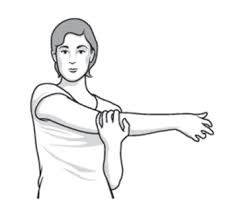
Image source: health.harvard.edu
3. Massage Therapy
A gentle massage can help reduce shoulder blade pain.
Use circular motions with gentle pressure on the sore area.
Massaging can help improve blood flow and relax tight muscles.
Self-Massage:
You can use a tennis ball or a foam roller to massage your shoulder blades.
Place the ball or roller between your back and a wall, then move your body up and down and side to side to massage the area.

Image source: backintelligence.com
4. Proper Posture
Good posture is key to preventing and easing shoulder blade pain.
Make sure your work and sitting environment support good posture.
Ergonomic Adjustments:
Adjust your chair and computer screen so you don’t have to hunch over.

Sit up straight with your feet flat on the floor.
Your elbows should be at a 90-degree angle, and your computer screen should be at eye level.
5. Over-the-Counter Pain Relievers
Non-prescription pain relievers like ibuprofen or acetaminophen can help reduce pain and inflammation.
These can be helpful in the short term, but should not be relied upon as a long-term solution.
- Ibuprofen and Acetaminophen: Follow the dosage instructions on the packaging, and do not exceed the recommended amount.
6. Rest and Activity Modification
Rest is important for recovery.
Avoid activities that make your pain worse and give your muscles time to heal.
Gradually return to your normal activities as your pain decreases.
- Avoid Overuse: If your pain is due to overuse, it is important to rest the affected muscles. This might mean taking a break from certain activities or modifying how you do them.

- Gradual Return: As your pain starts to improve, slowly reintroduce activities. Listen to your body and avoid pushing yourself too hard.
When to See a Professional
Home remedies can be effective, but if your shoulder blade pain is severe or doesn’t go away, it’s time to see a professional.
- Persistent Pain: If the pain lasts more than a few weeks, it’s important to get it checked out. Chronic pain can be a sign of a more serious issue that needs professional treatment.
- Weakness or Numbness: If you feel weakness or numbness in your arm, this could indicate a nerve issue that needs immediate attention.
- Severe Pain: If the pain is very bad and affects your daily life, seek help. Severe pain can significantly impact your quality of life and may require more intensive treatment.
Physiotherapy for Shoulder Blade Pain in Sargodha
For professional help, consider visiting Dr. Farjad Afzal, a trusted physiotherapist in Sargodha.
His clinic offers personalized physiotherapy services to help you recover.
- Personalized Treatment Plans: Dr. Afzal provides treatment plans tailored to your specific needs. These plans often include exercises, massage therapy, and ergonomic advice.
About Dr. Farjad:
Dr. Farjad Afzal is a Pediatric Physical Therapist with more than 12 Years of Experience. He is currently practicing in Khawaja Arshad Hospital.
He has a T-DPT/MPhil from the University of Health Sciences, Lahore, and a BSPT from King Edward Medical University. He previously worked as a pediatric physical therapist at COMPASS.

 Pak Physio Sargodha
Leave a comment