

What is a Frozen Shoulder?
Are you suffering from persistent shoulder pain and stiffness?
You might be dealing with a condition known as frozen shoulder.
A frozen shoulder, or adhesive capsulitis, is a condition that causes pain and restricts movement in the shoulder joint.
It typically develops slowly over time and can make everyday activities difficult.
Stages of Frozen Shoulder
Frozen shoulder develops in three stages, each with its own symptoms and challenges:
- Freezing Stage: This is the initial stage where pain gradually increases. As the pain worsens, shoulder movement becomes more restricted. This stage can last from six weeks to nine months.
2. Frozen Stage: In this stage, the pain may start to decrease, but the shoulder remains stiff. This stiffness makes it difficult to complete daily tasks. The frozen stage can last from four to six months.
3. Thawing Stage: During this final stage, the shoulder’s range of motion begins to improve. The thawing stage can last from six months to two years.
Causes
Frozen shoulder occurs when the tissues around the shoulder joint become inflamed and stiff.
The exact cause is not always clear, but it often follows an injury or surgery.
Sometimes, it develops without any obvious reason.
Who Gets Frozen Shoulder?
Certain people are more at risk of developing a frozen shoulder:
- Age: People over 40 years old.
- Gender: Women are more likely to develop a frozen shoulder than men.
- Diabetes: Individuals with diabetes are at a higher risk.
- Medical Conditions: People with certain medical conditions, such as thyroid problems, Parkinson’s disease, or cardiovascular disease.
- Shoulder Injuries: Those who have had shoulder injuries or surgeries.
Treatment
There are various treatment options available for frozen shoulder, and the best approach depends on the severity of the condition and the patient’s overall health.
Home Remedies
1. Frozen Shoulder Exercises:
Gentle stretching and strengthening exercises can help maintain mobility and relieve pain.
Here are some effective exercises for frozen shoulder:
- Pendulum Stretch:
- Stand and lean over slightly, allowing the affected arm to hang down.
2. Swing the arm in small circles, about a foot in diameter. Perform ten revolutions in each direction once a day.

Image Source: Wikimedia Commons
- Towel Stretch:
- Hold a towel behind your back with one hand and grab the opposite end of the towel with your other hand.
2. Use your good arm to pull the affected arm upward to stretch it. Repeat 10-20 times a day.
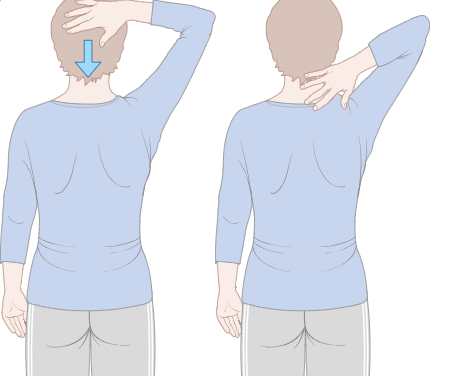
Image Source: Wikimedia Commons
- Finger Walk:
- Face a wall three-quarters of an arm’s length away.
- Reach out and touch the wall at waist level with the fingertips of the affected arm.
- Slowly walk your fingers up the wall, as far as you comfortably can. Repeat this exercise 10-20 times a day.
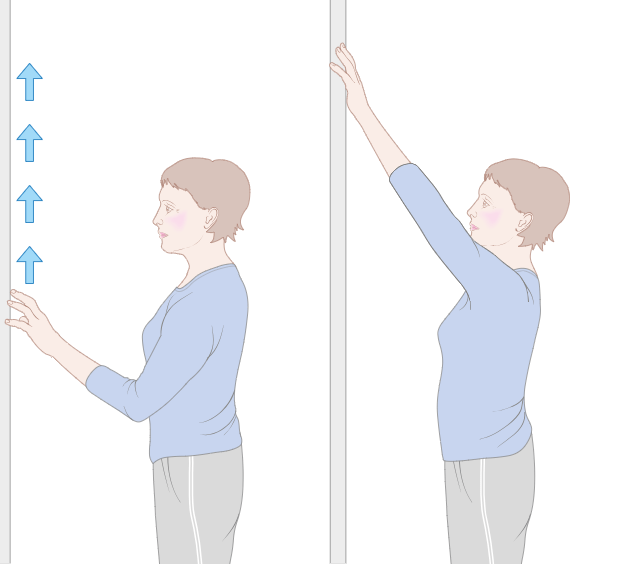
Image Source: Wikimedia Commons
- Cross-Body Reach:
- Sit or stand. Use your good arm to lift your affected arm at the elbow.
- Bring it up and across your body, exerting gentle pressure to stretch the shoulder.
- Hold the stretch for 15-20 seconds. Repeat 10-20 times per day.
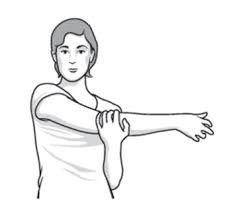
Image Source: Harvard Health Education
- Armpit Stretch:
- Use your good arm to lift the affected arm onto a shelf about breast-high.
- Gently bend your knees, opening up the armpit. Stretch the shoulder in this manner.

Image Source: Harvard Health Education
2. Cold and Heat Therapy:
- Cold Therapy: Applying ice packs to the shoulder can reduce inflammation and numb sharp pain.
- Heat Therapy: Using a heat pad or warm towel can help relax tense muscles and alleviate discomfort.
3. Pain Relief:
- Over-the-counter pain relievers like ibuprofen or acetaminophen can help manage pain and inflammation.
Medications
In some cases, doctors may prescribe stronger pain medications or corticosteroid injections to reduce inflammation and pain.
These injections can provide temporary relief and make it easier to participate in physical therapy.
Physiotherapy
A physical therapist can guide you through specific exercises and treatments to improve shoulder mobility and reduce pain.
This is often a crucial part of recovery.
They may also use techniques such as ultrasound, electrical stimulation, and joint mobilization to help improve shoulder function.
FAQs
Is There a Cure for a Frozen Shoulder?
While there isn’t a quick cure, most people recover with time and proper treatment. The condition can take several months to years to fully resolve.
What is the Fastest Way to Get Rid of a Frozen Shoulder?
Gentle exercises, physical therapy, and following your doctor’s advice can speed up recovery. Patience and consistency are key.
Is It Possible to Prevent a Frozen Shoulder?
Keeping your shoulder joint active and performing regular range-of-motion exercises can help prevent frozen shoulder, especially if you’ve had shoulder issues before.
Can Frozen Shoulder Heal on its Own?
Yes, frozen shoulder can eventually heal on its own, but this process can take a long time. Treatment can help speed up recovery and reduce pain.
How to Avoid a Frozen Shoulder?
Stay active, perform shoulder exercises regularly, and avoid prolonged immobilization of the shoulder.
How to Sleep with a Frozen Shoulder?
Use a supportive pillow to keep your shoulder in a comfortable position. Avoid sleeping on the affected side. Try sleeping on your back with a pillow under the arm for support.
Conclusion
By understanding the causes and treatment options for frozen shoulder, you can take proactive steps to manage the condition and find relief from pain and stiffness.
If you suspect you have a frozen shoulder, consult with a healthcare professional in Sargodha to develop a treatment plan tailored to your needs.
 Pak Physio Sargodha
Leave a comment